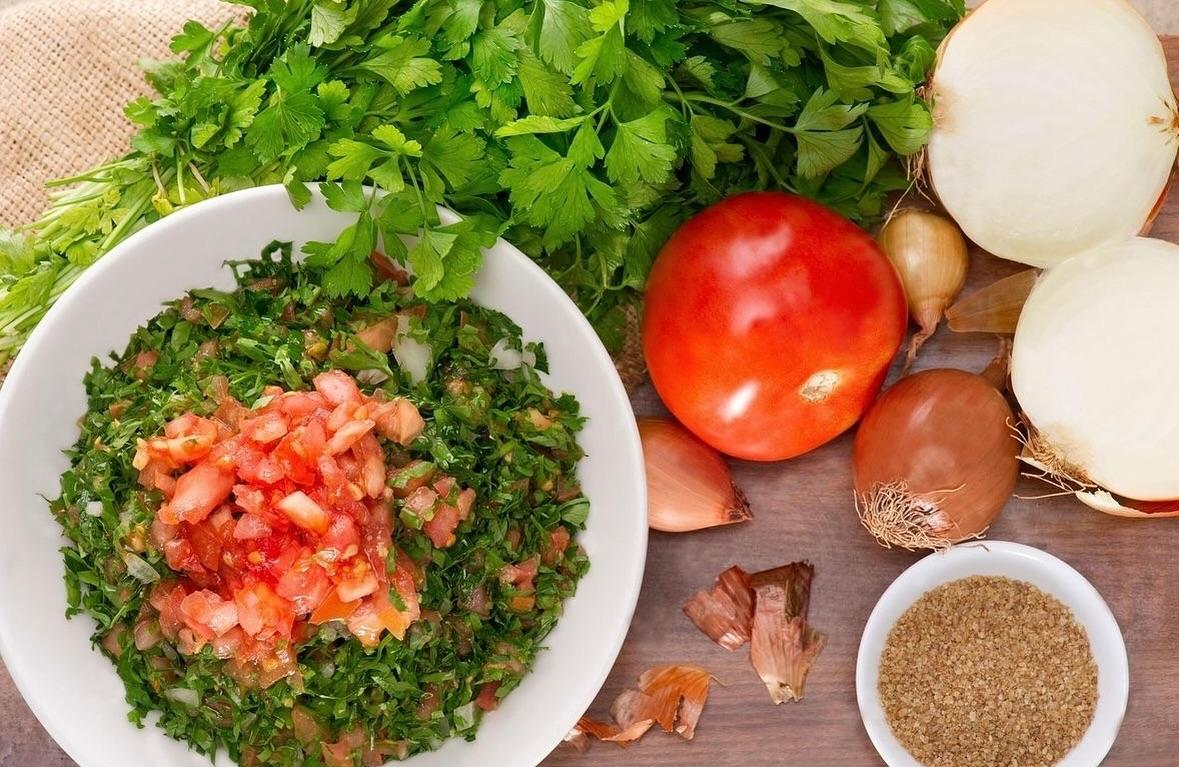
Fresh parsley, aromatic mint, ripe tomatoes, a small amount of fine bulgur, olive oil and freshly squeezed lemon juice. Tabbouleh may look simple, but behind this combination stands one of the most recognizable traditions of Lebanese cuisine.
At Murray Restaurant in Sofia, we prepare it in the style associated with Lebanon - with plenty of fresh herbs and only a small amount of bulgur.
What is tabbouleh?
Tabbouleh is a traditional Levantine salad and one of the emblematic dishes of Lebanese cuisine.
It is also a good example of how individual dishes fit into the wider Lebanese cuisine, its main dishes and shared-table tradition.
Its foundation is not bulgur, as many people assume, but finely chopped fresh parsley. Mint, tomatoes, onion, a little fine bulgur and a bright dressing of olive oil and lemon juice complete the dish.
The result is light, aromatic and intensely fresh, with parsley taking the lead while the other ingredients build the balance around it.
Tabbouleh and fattoush are two distinct Lebanese salads. Tabbouleh puts fresh parsley at the centre, while fattoush combines fresh vegetables with crispy bread. Explore what fattoush is and how it differs from tabbouleh.
Traditional Lebanese tabbouleh is not a bulgur salad
This is probably the most common misconception about tabbouleh.
Many modern versions contain a large amount of bulgur with relatively few herbs. Traditional Lebanese-style tabbouleh turns that ratio around.
Parsley is the star.
Bulgur is present only in a small amount. Its purpose is to add texture and absorb some of the dressing, not to turn the dish into a grain salad.
That is why Lebanese tabbouleh has its characteristic bright green appearance and fresh, herbaceous and citrus-forward flavour.
What are the main ingredients in tabbouleh?
Traditional tabbouleh is built around a short list of simple ingredients:
- fresh parsley;
- fresh mint;
- ripe tomatoes;
- onion;
- a small amount of fine bulgur;
- olive oil;
- freshly squeezed lemon juice.
Because the ingredient list is so simple, quality matters.
There is no heavy sauce or long cooking process to hide behind. The freshness of the parsley, the aroma of the mint, the flavour of the tomatoes and the balance between olive oil and lemon all shape the final dish.
Why is parsley so important?
In many cuisines, parsley is treated mostly as a garnish or seasoning.
In tabbouleh, it becomes the dish itself.
That makes preparation important. The leaves need to be chopped finely enough to combine naturally with the other ingredients without being crushed into a paste.
Mixed with mint, tomatoes and a fresh lemon dressing, parsley creates the distinctive flavour that has made tabbouleh recognisable far beyond Lebanon.
Tabbouleh and the Lebanese mezze tradition
Tabbouleh makes even more sense when you see it as part of the Lebanese mezze tradition.
Rather than focusing on a single plate, mezze brings several dishes to the table to be shared.
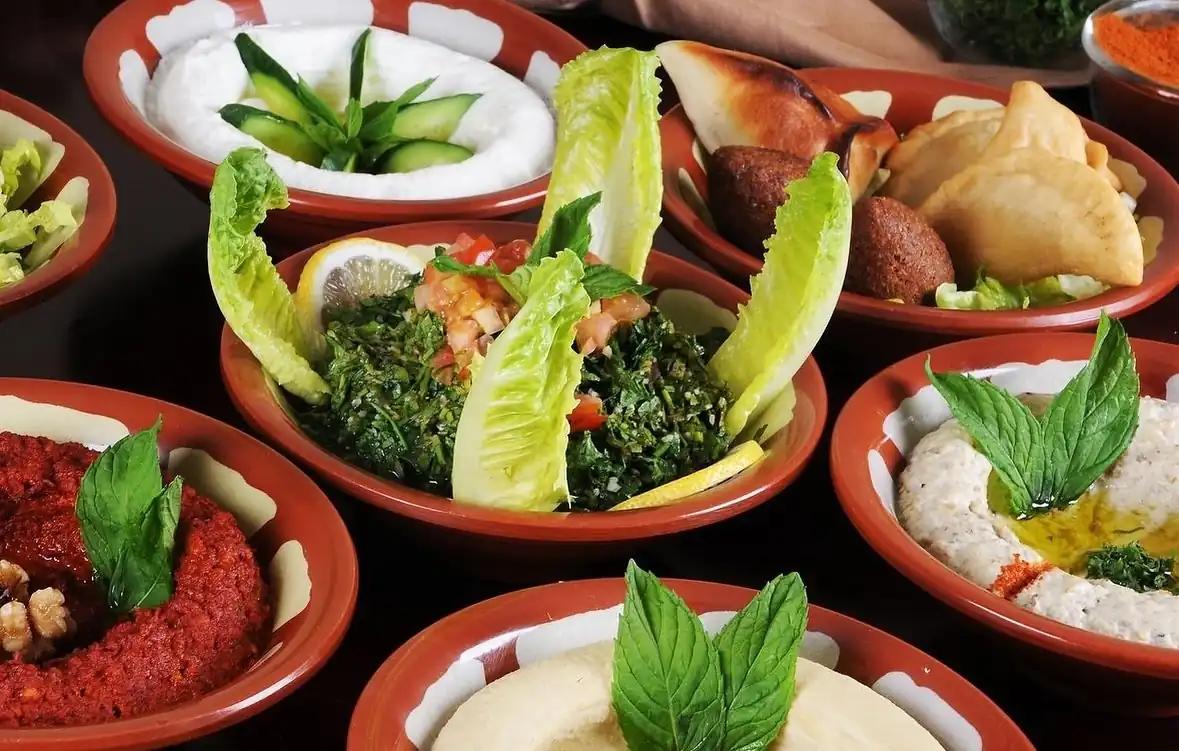
Tabbouleh may sit alongside hummus, falafel, mutabal, other dips, vegetables, warm bread and grilled dishes.
The meal becomes less about separate courses and more about tasting, combining and sharing different flavours.
This is one reason tabbouleh works so well on a Lebanese table. Its freshness provides contrast to richer and more deeply flavored dishes.
What goes well with tabbouleh?
The bright, fresh character of tabbouleh makes it a natural companion to many Lebanese dishes.
It pairs particularly well with:
- hummus;
- falafel;
- grilled meats;
- Lebanese mezze;
- warm bread;
- vegetable and legume dishes.
The acidity of the lemon and the freshness of the herbs help balance richer flavours.
It is the kind of dish you can return to throughout a meal, refreshing the palate between different bites.
Where can you try tabbouleh in Sofia?
In the current Murray Restaurant menu, tabbouleh is part of the selection of salads and mezze.
Murray Restaurant is located at 70 Kozloduy Str., Banishora, Sofia, close to Sofia Central Railway Station.
At Murray, we prepare tabbouleh in the Lebanese style, with plenty of fresh parsley, mint, tomatoes, lemon, olive oil and only a small amount of fine bulgur.
If the tabbouleh you know is mostly bulgur, traditional Lebanese-style tabbouleh may stand out for its fresher, more herbaceous and citrus-forward character.
You can enjoy tabbouleh on its own or as part of a broader Lebanese table with hummus, mutabal, falafel and grilled dishes.h you know is mostly bulgur, the Lebanese style may surprise you.
What is characteristic of traditional Lebanese tabbouleh?
There is no single secret ingredient.
What matters more is proportion and respect for the ingredients:
- parsley remains at the centre of the dish;
- bulgur supports rather than dominates;
- the vegetables should be fresh;
- lemon should provide a bright acidity;
- olive oil should bring the ingredients together without masking them.
That simplicity is part of the beauty of tabbouleh.
A handful of familiar ingredients, handled carefully and balanced correctly, can create a remarkably distinctive dish.
How does tabbouleh fit into a Lebanese meal?
Tabbouleh is a good choice when you want a fresh contrast to richer mezze and grilled dishes.
If you would like to try it as part of a Lebanese meal, you can book a table at Murray.