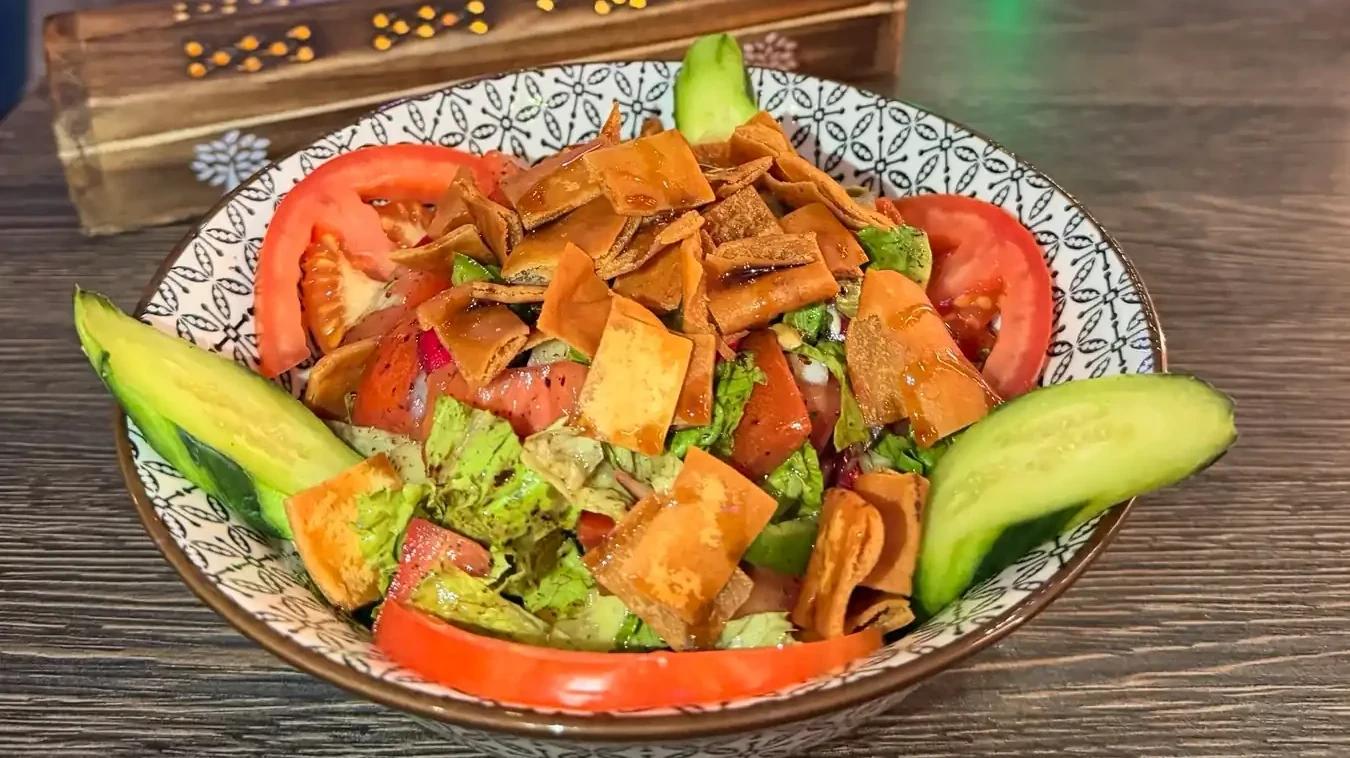
Fattoush is a traditional salad from Lebanon and the wider Levant, made with fresh vegetables, pieces of Arabic flatbread and a tangy dressing. In many recipes, lemon juice and sumac give the salad its distinctive acidity, while toasted or fried bread adds texture.
At first glance, fattoush may look like an ordinary mixed vegetable salad. What makes it different is the contrast between juicy vegetables, crisp bread and a dressing that brings the ingredients together.
Fattoush is also part of a wider culinary tradition in which seasonal produce, bread and shared dishes play an important role. Understanding how these elements work together helps explain why this salad is such a recognisable part of Lebanese cuisine.
What Makes Fattoush Different from an Ordinary Vegetable Salad?
The most distinctive ingredient in fattoush is Arabic flatbread, commonly referred to as pita.
The bread is usually toasted or fried, broken into irregular pieces and mixed with fresh vegetables. This creates a contrast between crisp bread and softer, juicier ingredients.
The dressing is another important difference.
While a simple green salad might rely on olive oil, vinegar or lemon juice, fattoush commonly includes sumac, a spice with a tart, slightly fruity flavour. Fresh herbs such as parsley and mint can add another layer of aroma.
Together, these ingredients give fattoush a character that goes beyond a standard vegetable salad with croutons.
The bread is not simply a garnish. It is an integral part of the dish, influencing both its texture and how the dressing is absorbed.
What Is Traditional Fattoush Made From?
There is no single fattoush recipe followed by every family or restaurant in Lebanon.
Ingredients can vary depending on the season, local traditions and personal preferences. Nevertheless, several components appear frequently in traditional versions.
Common fattoush ingredients include:
- Lettuce and other leafy greens: provide a fresh base and volume.
- Tomatoes and cucumbers: add moisture, sweetness and a refreshing character.
- Radishes and onions: introduce crunch and a slightly sharper flavour.
- Parsley and mint: contribute fresh herbal notes.
- Arabic flatbread: toasted or fried and broken into pieces.
- Lemon juice, olive oil and sumac: often form the basis of the dressing.
Some recipes also include green peppers, purslane or pomegranate molasses.
These variations do not make one version automatically more authentic than another. Fattoush is a flexible dish, and the balance between vegetables, bread and dressing matters more than following one fixed ingredient list.
Why Is Bread So Important in Fattoush?
The use of bread reflects a practical aspect of traditional cooking.
Instead of discarding leftover flatbread, it can be toasted and incorporated into another dish.
Once toasted, the bread develops a crisp texture and absorbs some of the dressing. This creates a combination of flavours and textures that would not be present in a salad made only from vegetables.
However, the bread does not always have to remain completely crisp.
Some older preparations deliberately soften toasted bread with water or lemon juice before adding the remaining dressing. In these versions, the bread becomes tender rather than crunchy.
Today, fattoush is commonly associated with crispy pita pieces, but both approaches illustrate how the dish has developed through different culinary traditions.
What Does Fattoush Taste Like?
Fattoush usually has a fresh, tangy flavour with herbal notes and a contrast between crisp and juicy textures.
The vegetables contribute freshness, the bread provides a toasted flavour, and the dressing brings acidity to the mixture.
One of the ingredients most closely associated with traditional fattoush is sumac.
What Is Sumac and Why Is It Used?
Sumac is a spice made from the dried and ground fruits of certain plants in the Rhus genus.
The culinary varieties used in Middle Eastern cooking have a tart, slightly fruity flavour that is sometimes compared with lemon.
In fattoush, sumac can be mixed into the dressing or sprinkled over the finished salad.
It is not a hot spice. Its main purpose is to provide acidity and enhance the flavour of the vegetables.
Some recipes also use pomegranate molasses, which introduces a deeper sweet-and-sour note.
Not every fattoush recipe contains pomegranate molasses, and the amount of sumac or lemon juice can vary considerably.
This is why two versions of fattoush may taste slightly different even when they contain similar vegetables.
How Is Fattoush Prepared and Served?
Fattoush is relatively straightforward to prepare, but the order in which the ingredients are combined can affect the final texture.
The vegetables are washed and cut into pieces. Lettuce is usually torn or roughly chopped, while tomatoes, cucumbers, radishes and other vegetables are prepared so that different ingredients can be enjoyed together.
The dressing is prepared separately.
Many recipes combine olive oil, lemon juice and sumac. Garlic or other seasonings may also be added, depending on the preferred flavour.
The flatbread is then toasted or fried and broken into bite-sized pieces.
If the aim is to preserve its crisp texture, the bread is best added shortly before serving. Once mixed with the dressing, it gradually absorbs moisture and begins to soften.
Fattoush is commonly served in a shared bowl or platter rather than as a strictly individual course.
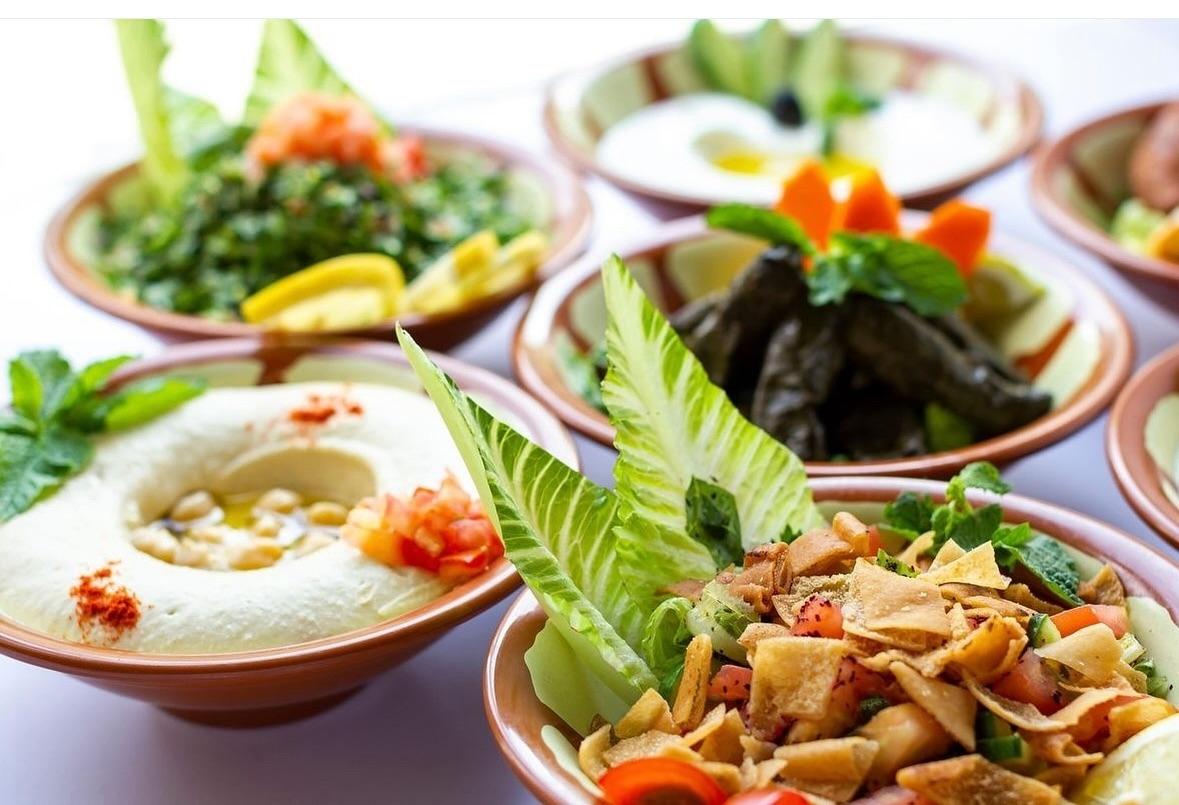
This makes it a natural addition to Lebanese mezze, where several smaller dishes can be placed in the middle of the table and enjoyed together.
Fattoush vs Tabbouleh: What Is the Difference?
Fattoush and tabbouleh are both traditional salads associated with Lebanese cuisine, but they have different main ingredients and textures.
Tabbouleh is primarily a herb-based salad in which finely chopped parsley plays the leading role. Tomatoes, a small amount of bulgur, mint, lemon juice and olive oil are commonly added.
Fattoush, on the other hand, is built around a broader mixture of vegetables, with pieces of flatbread providing one of its defining characteristics.
The difference is also noticeable when eating them.
Tabbouleh has a finely chopped texture and a pronounced herbal flavour. Fattoush usually contains larger vegetable pieces and offers a contrast between juicy ingredients and crisp bread.
If you particularly enjoy parsley, mint and a strong herbal character, tabbouleh may appeal to you.
If you prefer a more varied vegetable salad with crunchy bread and a tangy dressing, fattoush may be a better choice.
Neither salad is simply a variation of the other.
For a closer look at the ingredients and traditional preparation of the first salad, read our guide to traditional Lebanese tabbouleh.
What Lebanese Dishes Go Well with Fattoush?
Fattoush can be enjoyed as a light salad on its own, but it is also commonly served alongside other dishes.
Its fresh vegetables and tangy dressing make it a useful contrast to richer foods.
For example, fattoush pairs naturally with hummus or mutabal.
Creamy dips and crisp vegetables provide different textures, making the combination more varied than choosing several dishes with similar characteristics.
Fattoush can also accompany falafel, chicken dishes, kafta, shawarma and grilled meat.
One practical way to build a Lebanese meal is to begin with a dip and fattoush for sharing, then add a hot mezze or grilled dish.
Because fattoush already contains bread, it is worth considering how much additional flatbread you want to order with the rest of the meal.
You do not need a large number of dishes to experience different aspects of Lebanese cuisine.
A small selection combining a fresh salad, a creamy dip and something warm can already provide a good contrast of flavours and textures.
If you are unfamiliar with the menu, our guide to what to order at a Lebanese restaurant for the first time offers more suggestions.
Fattoush at Murray Restaurant in Sofia
Fattoush is one of the salads available on the menu at Murray Restaurant in Sofia.
On the current Murray menu, the dish is listed as Fattouch and includes lettuce, tomatoes, cucumbers, radishes, peppers and crispy bread.
The vegetables form the base of the salad, while the bread provides its characteristic texture.
It can be chosen as a fresh beginning to a meal or combined with other Lebanese dishes.
The ingredients listed for Murray's Fattouch should not be confused with every ingredient used in traditional fattoush recipes. For example, sumac and pomegranate molasses are discussed here as part of the broader culinary tradition, not as confirmed ingredients in Murray's version.
As the salad contains bread, guests who need to avoid gluten or have other food allergies should check the exact ingredients and possible cross-contact with the restaurant staff before ordering.
Murray Restaurant is located at 70 Kozloduy Street, Sofia, Bulgaria.
Frequently Asked Questions About Fattoush
Can fattoush be made without fried bread?
Yes. Arabic flatbread can be toasted in the oven instead of fried. Both methods are used in different fattoush recipes. The preparation method affects the texture and flavour, but the bread remains an important part of the salad.
Can fattoush be prepared in advance?
The vegetables and dressing can be prepared ahead of time and stored separately under appropriate refrigerated conditions. If you want the bread to remain crisp, add it shortly before serving.
Is fattoush a spicy salad?
Fattoush is not normally a hot or chilli-spicy salad. Its distinctive sharpness usually comes from ingredients such as lemon juice and sumac. Some versions include additional seasonings, so the exact flavour depends on the recipe.
Does fattoush contain gluten?
Traditional fattoush made with ordinary wheat-based pita bread contains gluten. Recipes can vary, so anyone following a gluten-free diet should check the specific ingredients and preparation methods rather than assuming that a vegetable salad is gluten-free.
A Fresh Way to Explore Lebanese Cuisine
Fattoush shows how familiar ingredients can come together to create a dish with a distinct identity.
Fresh vegetables, bread and tangy dressing each contribute something different, but the combination is what makes the salad recognisable.
If you have already tried hummus or tabbouleh, fattoush offers another way to explore the variety of Lebanese food.
You can browse the current Murray Restaurant menu to see how the salad fits alongside other Lebanese dishes.
If you would like to enjoy fattoush as part of a shared meal, you can also reserve a table at Murray Restaurant.