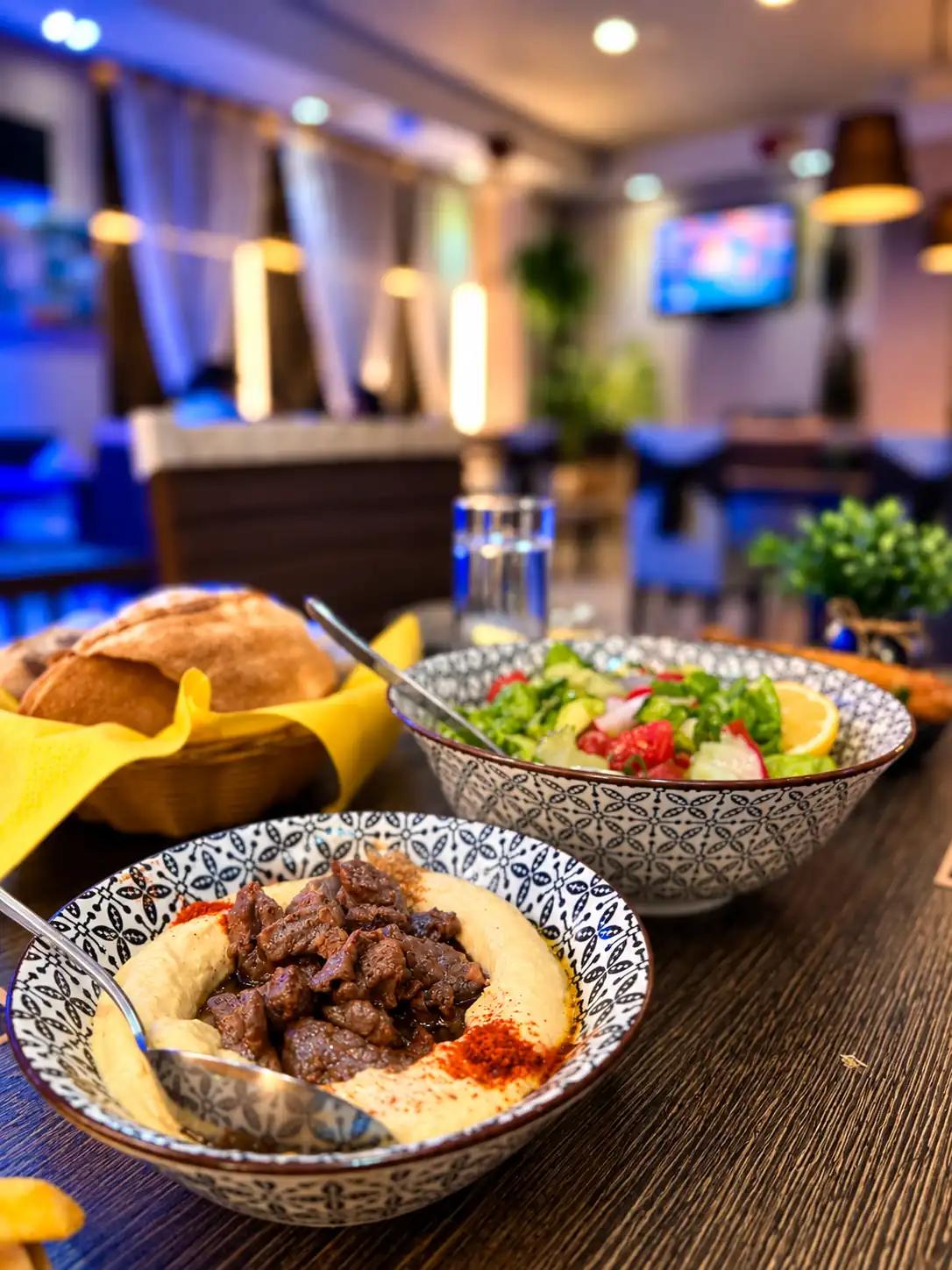
Hummus is one of the most recognizable parts of Lebanese cuisine and the broader culinary tradition of the Levant. At its core are cooked chickpeas and tahini, usually complemented by lemon, while garlic, olive oil and different toppings may also be used depending on the recipe.
On a Lebanese table, hummus is not simply a dip served on the side. It is part of Lebanese mezze and can be served alongside other dips, salads, vegetables and bread. It is often one of the dishes around which a shared meal is built.
The dish is widespread throughout the Levant and exists in different local versions. It is therefore more accurate to understand hummus as part of a shared regional culinary tradition rather than trying to identify one undisputed country where it was “invented”.
What Does “Hummus” Actually Mean?
The word “hummus” comes from the Arabic word for chickpeas.
The fuller name of the dish is hummus bi tahini, meaning chickpeas with tahini. The name reflects the two main ingredients that define classic hummus: cooked chickpeas and sesame tahini.
This distinction matters because outside the Middle East, the word “hummus” is increasingly used for a variety of creamy dips. In its traditional context, however, chickpeas and tahini remain at the heart of the dish.
What Is Hummus Made From?
In many common versions of hummus bi tahini, the basic ingredients include:
- cooked chickpeas;
- tahini;
- lemon juice;
- salt.
Garlic is also used in many recipes, although the amount and other ingredients can vary. Olive oil is often added when the hummus is served, while whole chickpeas, parsley, spices or other garnishes may be placed on top.
Variations between recipes are completely normal. The balance between chickpeas, tahini and lemon, for example, can change both the flavour and the texture.
When referring specifically to Murray, we follow the description in the restaurant’s current menu. The classic hummus is presented as a dip made with chickpeas, tahini, lemon and olive oil.
What Role Does Tahini Play?
Tahini is a paste made from ground sesame seeds and is one of the ingredients that distinguishes hummus bi tahini from a simple chickpea purée.
It adds body and a distinctive sesame flavour, but the proportion of tahini to chickpeas is not the same in every recipe. As a result, two hummus recipes made with similar basic ingredients can still differ noticeably in flavour and consistency.
Tahini also connects hummus with other dishes from the region. It appears in different dips and sauces, but that does not make them varieties of hummus. Mutabal, for example, also commonly contains tahini, but its base is roasted eggplant rather than chickpeas.
What Does Hummus Taste Like?
Classic hummus has a relatively mild and balanced flavour.
Chickpeas provide a rich, slightly earthy base, tahini adds its characteristic sesame flavour, and lemon brings acidity and freshness. In recipes that include garlic, it may be more noticeable, while different proportions of tahini and lemon can shift the overall balance.
Texture is also an important part of the dish. Hummus is usually smooth and creamy, although its exact consistency depends on the preparation method and the proportions of the ingredients.
This relatively mild and familiar flavour makes hummus a good starting point for someone trying Lebanese cuisine for the first time. At the same time, the combination of chickpeas, tahini and lemon offers an introduction to ingredients and flavours that also appear elsewhere on the Lebanese table.
How Is Hummus Served in Lebanon?
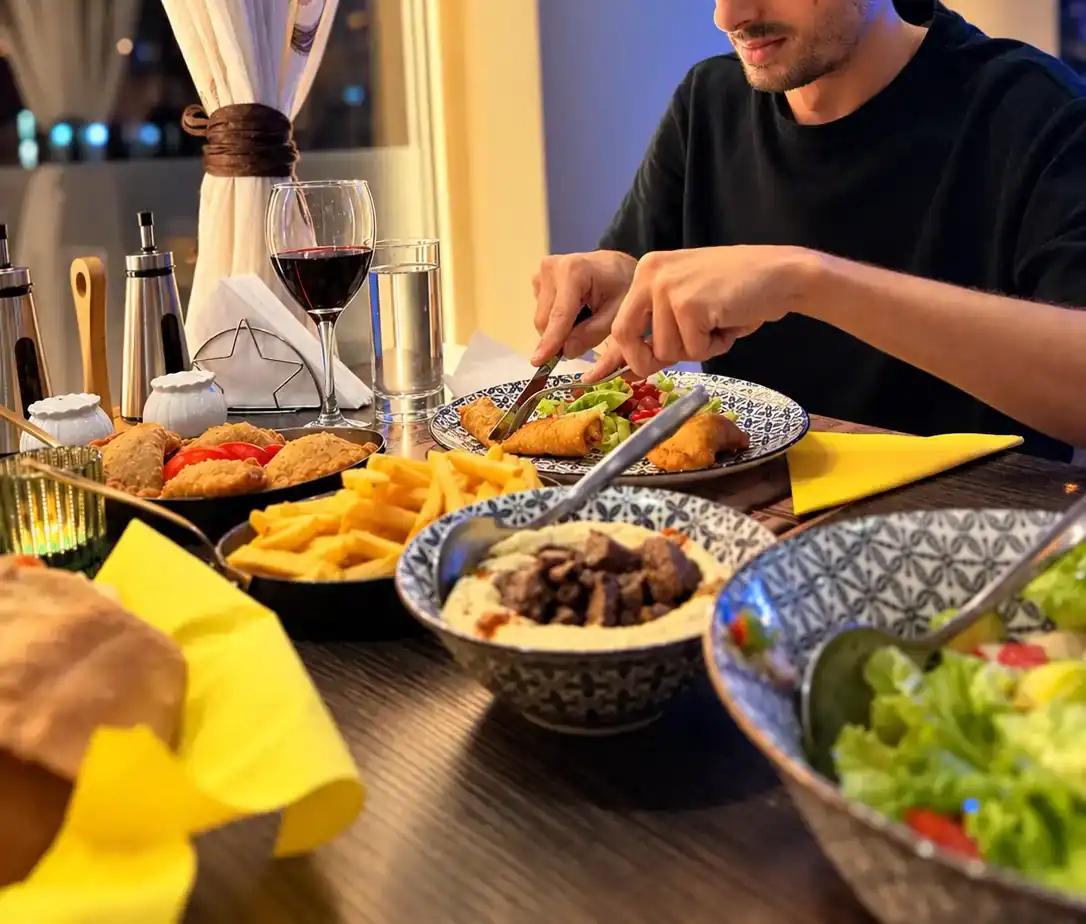
In Lebanon, hummus is closely associated with mezze and the shared table.
It can be placed on the table alongside other cold and hot dishes, salads and Arabic bread. Instead of each person necessarily receiving a separate starter, several dishes can be shared among everyone at the table.
Hummus is often eaten with bread, which is used to scoop up the dip. There are also versions topped with chickpeas, meat, nuts or other ingredients. Across the Levant, hummus is not limited to mezze. Depending on the context, it may also be part of breakfast or be served as a more substantial dish in its own right.
For this reason, describing hummus simply as a “dip” can help someone quickly understand how it is eaten, but it does not fully describe its place in Lebanese and wider Levantine culinary culture.
Is Hummus Eaten on Its Own?
It can be, but much of the character of Lebanese mezze comes from combining different dishes.
Hummus can be served alongside fresh tabbouleh, mutabal, muhammara, falafel, stuffed vine leaves or other mezze dishes. This brings different ingredients, flavours, temperatures and textures together on the same table.
It is also a useful way to understand why hummus, mutabal and muhammara should not simply be treated as three similar “dips”.
Hummus is based on chickpeas.
Mutabal is based on eggplant.
Muhammara has a completely different base and its own flavour profile.
When the three are tasted side by side, the differences become much easier to recognize.
Are Hummus and Mutabal the Same Thing?
No.
The easiest way to tell them apart is by their main ingredient.
Hummus is based on chickpeas and tahini, while mutabal is based on eggplant and also commonly contains tahini.
The presence of tahini in both dips is one reason they may sometimes appear similar to someone trying them for the first time. Chickpeas and eggplant, however, give them different textures and different flavour profiles.
The distinction can also be seen clearly in Murray’s current menu. The classic hummus is described with chickpeas, tahini, lemon and olive oil, while the mutabal contains ground eggplant, tahini, garlic and lemon.
If you'd like to explore how all three dips differ in ingredients, flavour and texture, read our comparison of hummus, mutabal and muhammara.
Are There Different Types of Hummus?
Yes. The same basic preparation can be served in different ways or combined with other ingredients.
This can also be seen in the menu at Murray Restaurant in Sofia.
Alongside classic hummus, Murray offers Hummus Beiruti, described as a spicy hummus with parsley and peppers, sesame tahini, lemon and olive oil.
There is also Hummus with Meat, which combines chickpeas and tahini with beef, nuts and olive oil.
The Lebanese breakfast selection also includes Foul and Hummus, combining fava beans, chickpeas, garlic and tahini.
These examples illustrate an important point: hummus does not necessarily mean the exact same plate with identical toppings and presentation every time.
The base remains recognizable, while garnishes, additional ingredients and the overall flavour profile can change.
Where Does Hummus Come From?
The answer is more complicated than it may first appear.
Hummus is strongly associated with the cuisines of the Levant and today forms part of the culinary traditions of different countries and communities across the region. The exact time and place in which modern hummus bi tahini first appeared, however, cannot be established with certainty.
Historical sources show that chickpeas have been used in the region for a very long time, and there are records from the medieval period of dishes made with processed chickpeas. This does not mean that those dishes were identical to the hummus we know today. The historical presence of chickpeas, tahini and other individual ingredients also does not prove exactly when they were first combined in the modern form of the dish.
The safer conclusion is that hummus has deep roots in the culinary tradition of the Levant and has long been part of the Lebanese table.
Hummus at Murray Restaurant in Sofia
Hummus appears in several places on the current Murray Restaurant menu.
The classic version is part of the cold starters and is prepared with chickpeas, tahini, lemon and olive oil. The menu also includes Hummus Beiruti, Hummus with Meat and combinations in which hummus is served alongside other Lebanese dishes.
In the “Trio of Dips”, for example, hummus is served together with mutabal and muhammara. This is a practical way to taste the three dips side by side, as each has a different base and its own flavour profile.
Hummus is also included in the Murray Lebanese Mezze Box together with mutabal, stuffed vine leaves, falafel and Arabic bread.
If you are just beginning to explore Lebanese cuisine, hummus is a good place to start. Its role in the cuisine becomes even clearer, however, when it is enjoyed as part of a broader table with different mezze, salads and other dishes.
Murray Restaurant is located at 70 Kozloduy Street, Banishora, Sofia, near Sofia Central Railway Station.
If you would like to try hummus as part of a Lebanese meal, you can reserve a table at Murray.